


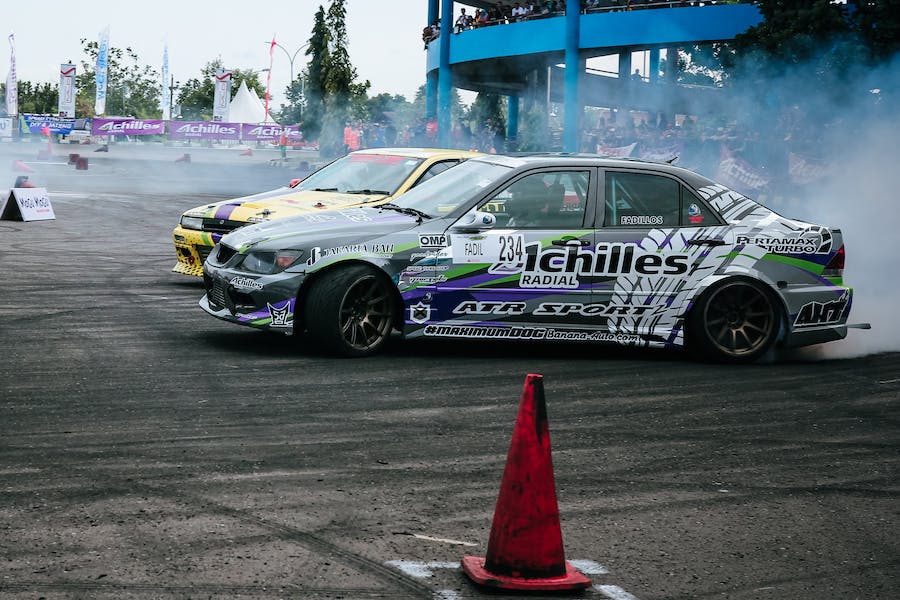

Drifting is a dynamic and adrenaline-filled motorsport discipline that requires not only the driver’s skills but also a properly prepared car. This guide contains key modifications for drifting that will help you transform a standard car into a machine ready for controlled sliding.
Stiffened Suspension - The Foundation of Drifting Dynamics
When preparing a car for drifting, suspension cannot be overlooked. Stiffened suspension is not just about sport appearance; it's primarily about optimizing chassis performance, which allows for better control during drifting. Harder springs and shock absorbers form the foundation that ensures fast and precise mass transfer during dynamic maneuvers. This allows the car to “sit” quickly in turns and enter a drift aggressively while maintaining control. However, it's important to note that overly stiff suspension can be unpredictable on uneven surfaces, so it's crucial to find the right balance that provides both comfort and effectiveness during drifting.
Lowering the Center of Gravity - Stability is Key
Lowering the center of gravity is another step toward perfect grip and stability during drifting. By using lower springs or adjustable suspensions, the car's body position is reduced, which directly decreases lateral roll and improves vehicle stability. This is particularly important during sudden changes of direction, where maintaining balance between the front and rear axles is critical. However, it’s essential to ensure that the lowering doesn’t negatively impact the suspension’s ability to absorb uneven surfaces, as drifting often takes place on tracks with varied quality surfaces. Therefore, height adjustments should be done by experienced specialists who can tailor the setup to the drifter's needs and the track specifications.
Welding the Differential - The Key to Effective Drifting
Welding the differential, also known as 'spooling the diff,' is one of the most important modifications for any drifter. By making this change, both rear wheels are driven simultaneously, which is essential when maintaining a continuous drift. In a standard setup, the differential allows independent rotation of the wheels, which can lead to traction loss and uncontrolled sliding. A welded differential eliminates this problem, ensuring that both rear wheels “fight” for traction evenly, which is key to maintaining controlled drifting. While this modification may not be practical for everyday use, in the drifting world, it is appreciated for its simplicity and effectiveness.
What Brakes for Drifting? - Strength and Durability in Control
Choosing brakes for drifting is not just about braking force but also about the ability to work under extremely high temperatures and resist 'fading,' the decrease in braking efficiency during prolonged use. High-quality components like second caliper adapters, ventilated rotors, and high-temperature resistant brake pads are essential to maintaining stability and safety during drifting. Combined with hydraulic handbrake adapters, which allow for mounting an additional hydraulic handbrake, the driver gains the ability to precisely modulate braking force, which is invaluable when initiating and maintaining a drift. This allows for precise cornering and ensures that every drift entry is both spectacular and safe. Properly selected brakes are not just about driving comfort; they can also decide fractions of a second on the track, which could be the difference between victory and defeat.
Check out Hydro Handbrakes in CNC71's Offer
Hydraulic Steering Adapters - Maximizing Control
Hydraulic steering adapters are advanced components that play a crucial role in drifting modifications. Installing them allows for a significant increase in front wheel steering angle, which directly improves vehicle control during drifting. With these adapters, a drifter can execute wide turns while maintaining smooth movement, something that is impossible with standard suspension geometry settings. Additionally, steering adapters allow the driver to make quick corrections to the trajectory, which is invaluable when dealing with unforeseen changes in traction or avoiding collisions. As a result, a car with properly selected and installed hydraulic steering becomes much more predictable during drifting, which is the foundation for building confidence and skills for a beginner drifter.
Short Shifters - Seconds Are Worth Gold
Short shifters are essential elements in every drifter's toolkit. Installing a short shifter changes the gear shift dynamics by reducing both the distance the lever has to travel and the time required to make the change. In drifting, where managing torque and reaction speed are crucial, every millisecond counts. The short shifter ensures that gears engage decisively and without delay, resulting in smoother transitions from one turn to the next and maintaining optimal engine RPM. This helps keep the continuity and rhythm during a series of complex drifting maneuvers. Additionally, the shorter gear lever provides a more direct and satisfying driving feel, which for a motorsport enthusiast is just as important as the drifting technique itself.
The Right Equipment and Skills Are Key to Success
Preparing a car for drifting requires both knowledge and the right modifications. Remember to tailor each change to your skills and driving style. Drifting is not only a display of skill but also a continuous process of optimizing the car. With experience, you’ll be able to drift even better, making each drift even more spectacular.

